Understanding the Viable Agreements Framework (VAF)
The Viable Agreements Framework (VAF) is the structured process used in mediation at Wes Mediation.
Its purpose is simple:
To help participants determine whether a viable way forward exists between them.
Disputes often continue because conversations become circular, key issues remain unclear, or proposed solutions have not been properly examined. The framework provides a clear structure for working through these challenges in a practical and constructive way.
Rather than rushing toward agreement, VAF guides the discussion through a series of stages designed to clarify the situation, explore realistic options, and determine whether any proposed outcome is genuinely workable.
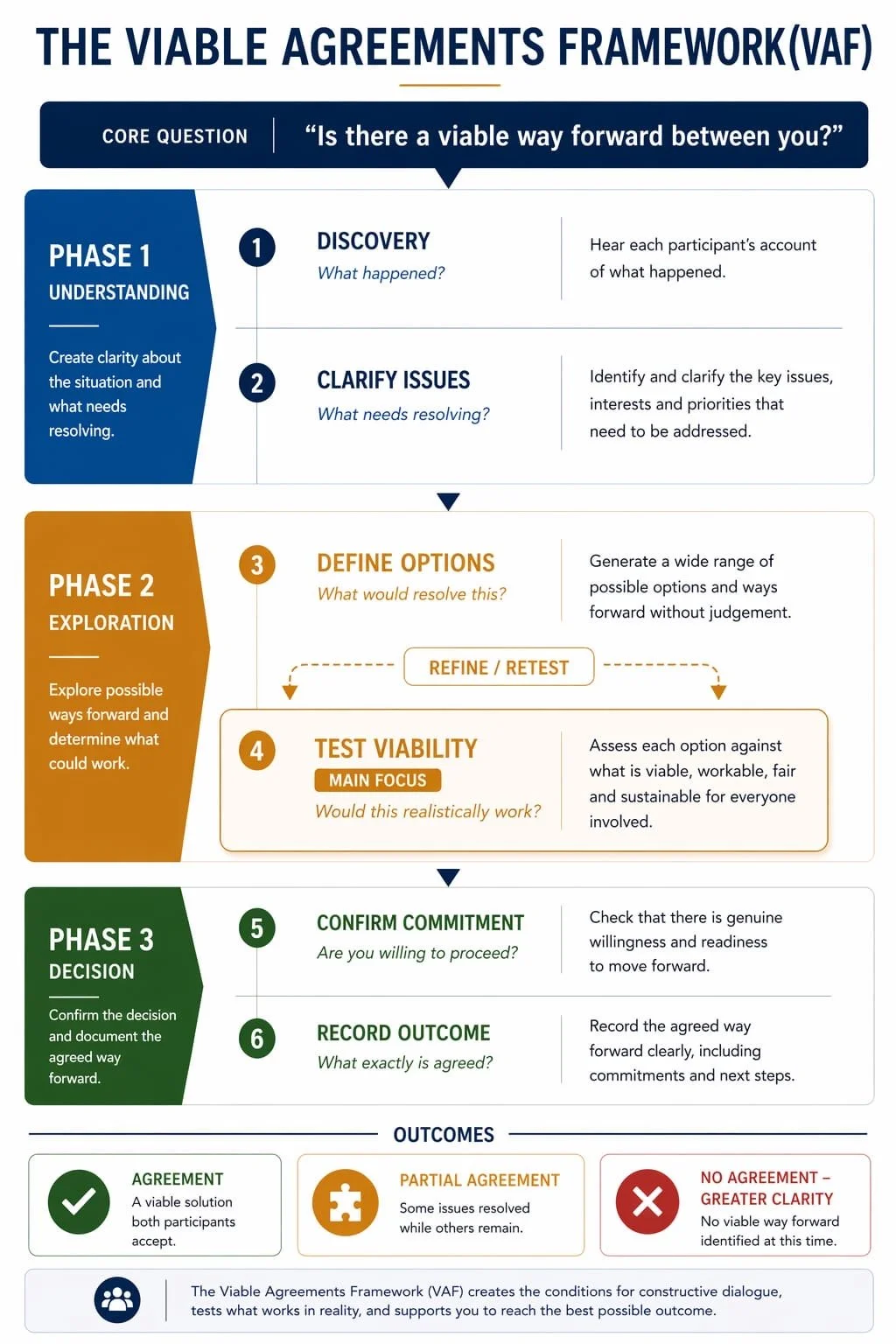
The process is guided by one central question: “Is there a viable way forward between you?”
The Structure of the Framework
The Viable Agreements Framework consists of three phases and six stages, each designed to move the discussion forward in a clear and deliberate way.
Phase 1 - Understanding
Every dispute begins with different perspectives about what has happened. The first phase focuses on building a clear understanding of the situation.
Discovery - Understanding each participant’s perspective and concerns.
Issue Clarification - Identifying the key issues that require resolution.
Phase 2 - Exploration
Once the issues are clear, attention turns to exploring possible ways forward.
Option Development - Generating practical ideas and possible solutions.
Viability Testing - Evaluating whether proposed options are realistic and capable of working in practice. This stage sits at the centre of the framework. Rather than accepting solutions too quickly, options are carefully examined to ensure they are practical, sustainable, and workable for both participants. Where necessary, options can be refined and tested again until a realistic direction becomes clear.
Phase 3 - Decision
If a viable way forward emerges, the final phase confirms whether participants are prepared to commit to it.
Commitment Confirmation - Confirming that both participants are genuinely willing to proceed with the proposed outcome.
Outcome Recording - Clearly documenting the agreement or next steps so both participants leave with a shared understanding of what has been decided. An outcome is only considered final once it has been recorded and signed by both participants.
Possible Outcomes
Mediation does not assume that agreement will always be reached.
The process may conclude with:
A full agreement.
A partial agreement resolving some issues.
No agreement, but greater clarity about the situation and possible next steps.
Even where agreement is not reached, the structured process often helps participants better understand the situation and decide how they wish to move forward.
The Philosophy Behind the Framework
The Viable Agreements Framework is grounded in established mediation principles, while. placing particular emphasis on evaluating the real-world viability of proposed outcomes.
The framework is built on a simple principle:
An agreement is only successful if it works after the mediation ends.
For that reason, the process places particular emphasis on testing whether proposed solutions are genuinely viable before any commitment is confirmed. The aim is not simply to reach agreement during the mediation itself, but to help participants identify outcomes that are realistic, workable, and durable in practice.
Why the Structure Matters
Many disputes do not require legal intervention. They require a clear and constructive way of working through the issues.
The Viable Agreements Framework provides that structure, helping participants move from disagreement toward a practical and viable way forward.